
Industry Concerns
These industry reports examine the pressing issues, and what steps professionals can take to combat these risks in the supply chain.
Filters
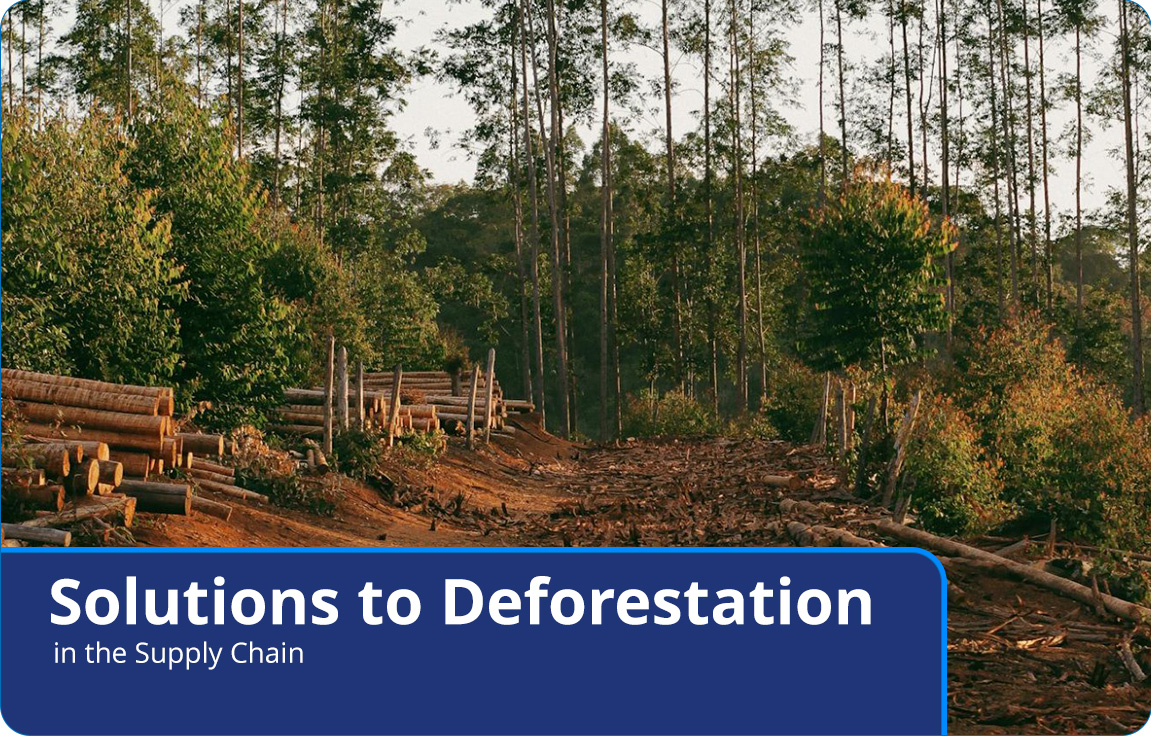
Solutions to Deforestation in the Supply Chain
Copy link As demand for products grows so does agriculture, which is often conducted unsustainably. Large areas of ancient woodland or rainforests are felled to make […]
As demand for products grows so does agriculture, which is often conducted unsustainably. Large areas of ancient woodland or rainforests are felled to make space for agricultural activity, and without sustainable farming practices, this can also result in soil degradation, where the soil no longer contains the nutrients for crops, alongside deforestation. Soil degradation and deforestation both result in the destruction of natural carbon repositories, which results in increased carbon emissions. Demand is growing for a variety of products that are traditionally sourced in an unsustainable manner.
If you would like to find out more about deforestation in the supply chain, you can complete the short form.
Unsustainable Palm Oil Sourcing: The True Cost
Palm oil is a type of vegetable oil originating from the fruit grown on African oil palm trees, which are now grown in Asia, North America […]
Palm oil is a type of vegetable oil originating from the fruit grown on African oil palm trees, which are now grown in Asia, North America and South America, in addition to their native Africa. The oil’s relatively low fat content, unique properties and source of vitamin E has resulted in a global demand with which growers are unable to keep up; unsustainable palm oil is an issue across many industries.
Palm oil is used in almost half of the packaged products in UK supermarkets, from chocolate and pizza to lipstick and shampoo. Its efficiency is one of the reasons palm is the most produced and consumed vegetable oil across the world. However, unsustainable palm oil also causes a number of environmental problems.
Note: see our RSPO integration for more information!
ESG in the Food & Beverage Sector
ESG in the food & beverage sector is a growing concern. Food and drink manufacturing, foodservice and hospitality, and agriculture – three of the main sectors […]
ESG in the food & beverage sector is a growing concern. Food and drink manufacturing, foodservice and hospitality, and agriculture – three of the main sectors in the food and drink industry – are all facing similar pressures to run their businesses more sustainably while reporting progress to stakeholders.
The fact that food production and agriculture accounts for 70% of global freshwater removal, 26% of all global greenhouse gas emissions, and 78% of global ocean and freshwater eutrophication, highlights why the sector will come under increasing scrutiny to improve its ESG credentials.
A key challenge faced by the food and beverage industry is collecting, storing, and maintaining data to support their ESG credentials.
As food and beverage supply chains become more complex, the collection, reporting, and presentation of accurate ESG data is increasingly essential in building trust in a business’s sustainable business practices.
If you would like to find out more about what practical steps you can take to mitigate these, you can complete the short form.

Natasha’s Law – The UK Food Information Amendment
As of 1st October 2021, all companies will be legally required to adhere to Natasha’s Law, and ensure that all food products that are prepacked for […]
As of 1st October 2021, all companies will be legally required to adhere to Natasha’s Law, and ensure that all food products that are prepacked for direct sale have a clear list of ingredients with allergens clearly specified on the label.
Our guide to Natasha’s Law, published in collaboration with Anaphylaxis Campaign, covers:
- The Dangers of Anaphylaxis.
- What Constitutes a PPDS product?
- Any Exceptions to the Law?
- Frequently Asked Questions.
- Allergen Control in your Supply Chain.